AI in Corporate Social Responsibility (CSR): From Reporting Cost to Strategic Revenue Driver
“Your annual ESG report isn’t just a compliance document; it's a multi-million-dollar risk assessment. Yet, most companies compile it manually, leaving them blind to the risks hiding in their own data.” CSR is failing the C-Suite. It's not the mission that's broken; it's the 90% of your team's time spent on manual spreadsheets, leaving millions at risk and zero strategic value. That's why we built Relific.
After years in corporate, I realised something simple but powerful: CSR isn't just a checklist item. I saw teams treat it as the real work, their chance to create lasting impact and bring genuine purpose into business. But when I looked at the reality behind it, things were different. Most CSR reports were built manually, pieced together from spreadsheets scattered everywhere, completely disconnected from the bigger picture of what companies were actually trying to achieve.
That’s where the idea for Relific began. I wanted to bring all those experiences, challenges, and insights together to build something that actually makes CSR smarter, faster, and more meaningful. Relific wasn't built to do better reporting; it was built to stop the reporting bottleneck entirely and turn that hidden 'social good' investment into a quantifiable, future-ready strategic asset.
Relific is an AI-powered CSR tool I built to help organisations break free from manual reporting and put AI to work where it actually matters, driving real, measurable impact. Here's what I believe: when you use AI the right way, it doesn't push people aside. It amplifies what they're trying to do. It surfaces insights buried in mountains of data, helps teams see their actual progress clearly, and makes sustainability something you can truly be accountable for, not just today, but for the long haul. In this article, I’ll share how AI can reshape CSR from a compliance task into a strategic advantage, and how companies can start quantifying its real ROI to build a stronger, more transparent future.
What is Corporate Social Responsibility (CSR)?
Corporate Social Responsibility (CSR) is about the initiatives and practices companies adopt to operate ethically, contribute to social and environmental sustainability, and create real impact for stakeholders beyond profit alone. CSR includes things like cutting carbon emissions, supporting local communities, advancing diversity and inclusion, and maintaining transparent governance. Modern CSR isn't a "nice-to-have" anymore; it's become a strategic necessity that directly shapes brand reputation, how you manage risk, and your long-term business value.
What is AI in Corporate Social Responsibility (CSR)?
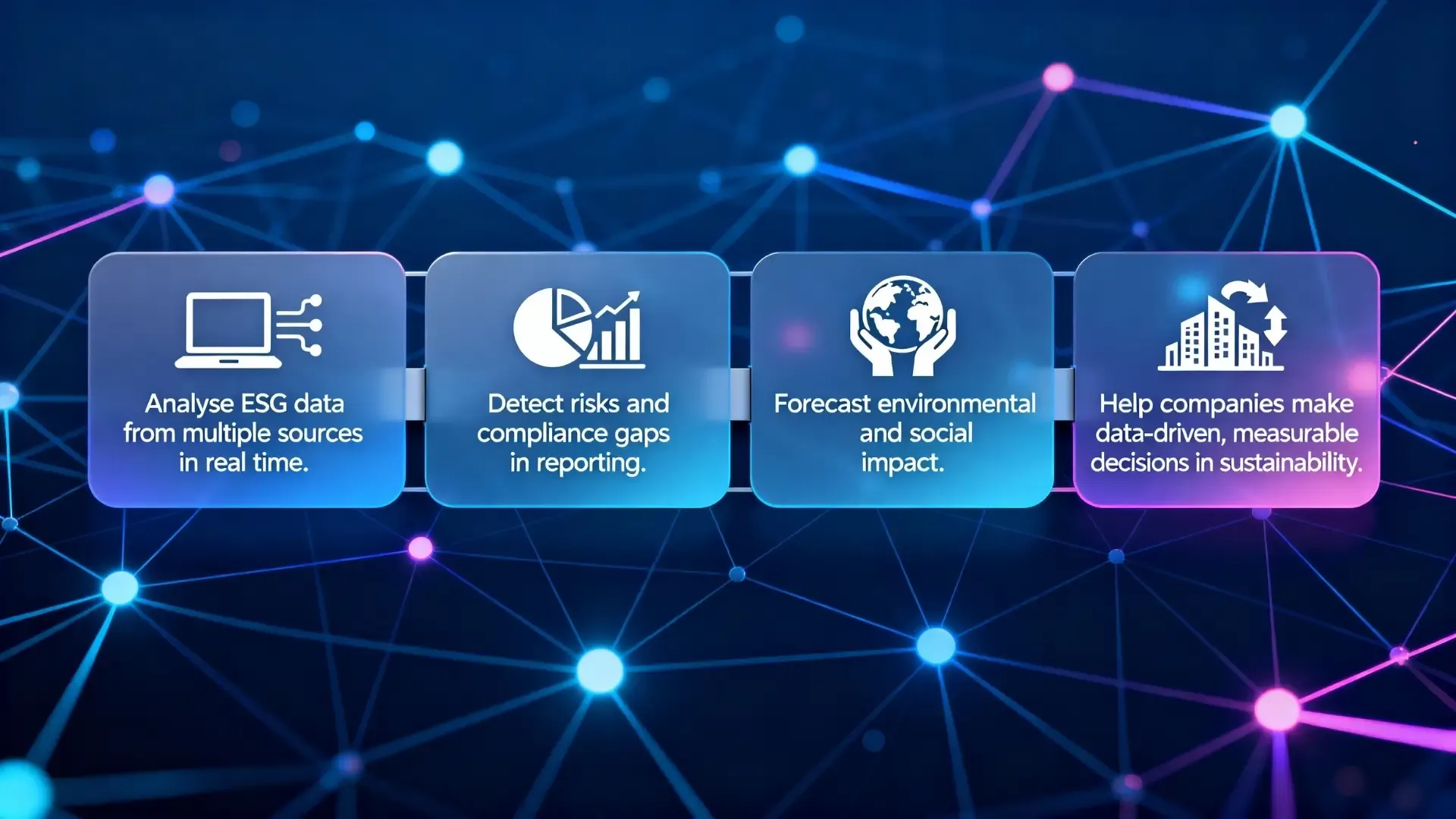
AI in CSR means using artificial intelligence to automate, optimise, and strengthen how companies approach sustainability and social responsibility. Here's what AI can actually do:
- Analyse ESG data from multiple sources in real time.
- Detect risks and compliance gaps in reporting.
- Forecast environmental and social impact.
- Help companies make data-driven, measurable decisions in sustainability.
Unlike traditional CSR reporting, which is manual and always looking at what has already happened, Artificial Intelligence and Corporate Social Responsibility turns the whole process into something predictive, actionable, and focused on actual ROI. Tools like Relific use AI to make sure your CSR efforts are efficient, accurate, and lined up with both the regulations you need to meet (like CSRD) and the bigger goals you're working toward for the long haul.
The Cost of Sticking with Spreadsheets: 4 Liabilities Demanding AI

Your company's sustainability efforts, still running on spreadsheets and manual data entry, have hit a wall. Sticking with these outdated methods isn't just slowing you down anymore; it's become a serious C-Suite liability that puts your business at risk for fines, reputational hits, and missed opportunities you can't afford to lose. Here are four alarming statistics that highlight the urgent need to shift to AI-powered Corporate Social Responsibility (CSR):
- 55% of public companies still house crucial ESG data primarily in spreadsheets.
- 60% of organisations report their ESG information is a "patchwork" of applications.
- 90% of CSR team time is often spent on low-value data entry and reconciliation.
- 100% of required CSRD-mandated reports will soon face mandatory third-party assurance.
The Data Deluge is Here (The Patchwork Problem)
Let's be honest, your company is drowning in data. Supplier invoices, utility bills, employee surveys, impact reports... It's coming at you from every direction. And here's the real kicker: none of them talk to each other. Everything's scattered, fragmented, living in its own little silo.
Here's What's Actually Happening: Get this 55% of public companies are still keeping their critical ESG data in spreadsheets. Spreadsheets! And another 60% openly admit their data is a complete patchwork. Now, think about what that means when regulators come knocking, demanding audit-ready accuracy. You're essentially setting yourself up to fail. Those errors and gaps you've been working around? They become liabilities the moment someone asks you to prove your numbers.
How AI Changes the Game: This is where AI comes in, and honestly, it's a relief. It handles what would take your team weeks, maybe months, in a fraction of the time. It pulls in all that chaos, every scattered document, every data point sitting in someone's inbox, and turns it into one clean source of truth you can actually trust. No more digging through endless folders at 11 PM. No more Slack messages asking "Hey, does anyone know where last quarter's emissions data went?" Just one clear picture of what's real, sitting there whenever you need it.
From Bottleneck to Blind Spot (The 90% Drain)
Your CSR team? They're talented people. Strategic thinkers. Problem solvers. But right now, they're buried in busywork that's stealing their potential.
The Problem: CSR teams spend up to 90% of their time simply moving data around, copying, pasting, reconciling, and double-checking spreadsheets. 90%. Think about that for a second. It means your most valuable people, the ones who should be identifying risks, spotting opportunities, and shaping your company's future, are instead stuck playing data janitor. And while they're cleaning up last quarter's numbers, new risks are emerging that nobody has time to see coming. You're always looking backwards when you should be looking ahead.
How AI Changes the Game: AI can take over that entire 90% the data entry, the reconciliation, all the grunt work that doesn't need a human brain. Suddenly, your team gets their time back. They can finally do what you actually hired them for: strategic thinking, risk analysis, innovation. The work that actually protects and grows your business. It's not about replacing people; it's about letting them be people again, not data processors.
New Regulations Require Perfection (The 100% Assurance Mandate)
The rules have changed, and they're not asking nicely anymore. Regulations like CSRD aren't suggestions; they're legal mandates with teeth. And they're coming for your data.
What's different now: Third-party auditors are going to crawl through your sustainability data with a fine-tooth comb. It's mandatory. And here's the uncomfortable truth: if your data still lives across fragmented spreadsheets and disconnected systems, you're not going to make it through that audit unscathed. Auditors need to trace every number back to its source. They need data that's both human-readable and machine-readable simultaneously. Your current setup? It can't deliver that. The result isn't just a slap on the wrist; it's financial penalties, failed audits, and stakeholders questioning whether they can trust anything you say about sustainability.
Why AI isn't optional here: AI tools are purpose-built for this exact moment. They create audit trails automatically. They standardise data across every source. They make sure that when an auditor asks, "Where did this number come from?" you have an answer in seconds, not days. It's not about being fancy; it's about survival in a regulatory environment that demands perfection.
The Key Takeaway for Leaders: The Time for AI is Now
We're living in a world where your ESG numbers directly shape your company's value, your reputation, and, honestly, whether you get to keep operating. In that reality, AI isn't some nice-to-have upgrade; it's something your business fundamentally needs to survive what's coming.
Here's what happens when you bring Artificial Intelligence and Corporate Social Responsibility work together: reporting shifts from this reactive scramble to meet compliance deadlines into something that actually creates value for your company. You get real-time insights that help you see around corners. You can manage risk with confidence instead of crossing your fingers. Your sustainability goals stop being aspirational and start being advantages that set you apart from competitors still stuck in spreadsheets.
From Manual Reports to Real-Time Impact: The AI Revolution in CSR
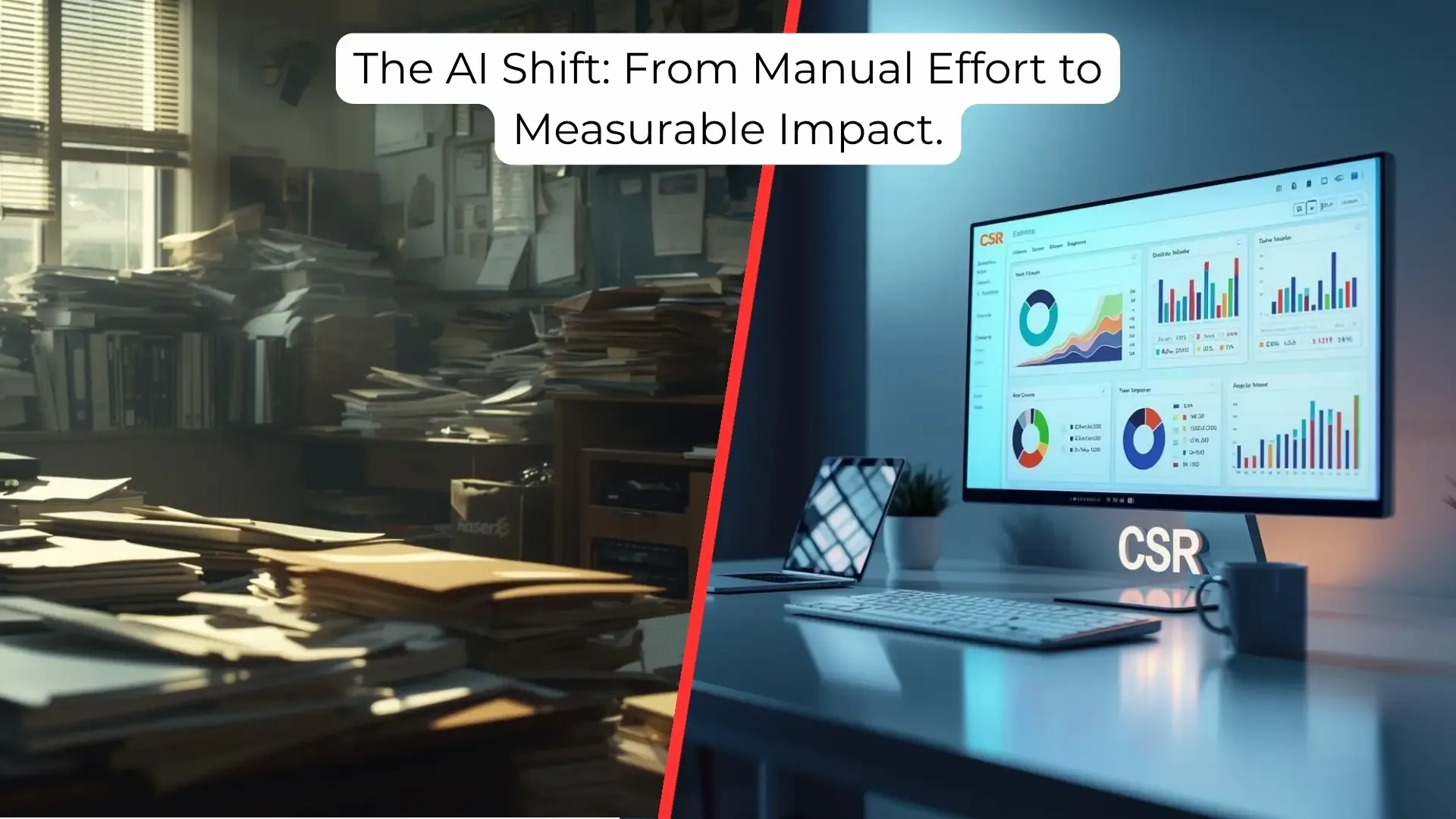
The manual reporting era? It's done. For years, teams have been pulling their hair out trying to wrangle data from every corner of the organisation, only to publish annual reports that feel ancient by the time they hit stakeholders' inboxes. But here's what's exciting: AI and Corporate Social Responsibility (CSR Reporting) are finally coming together in ways that actually make sense, turning what used to be a compliance headache into something that genuinely moves the needle for business.
Look, this isn't just another tech buzzword we're chasing. It's honestly about keeping up. ESG Data Management has grown into this massive beast that no team, no matter how dedicated, can tame with spreadsheets and weekend work sessions. Your data's scattered across departments, it's changing by the minute, and investors, customers, and regulators all want answers yesterday. That's the reality we're living in, and it's exactly why AI in CSR has shifted from "that's interesting" to "we can't afford not to do this."
AI-Powered CSR Automation: A New Standard for Sustainability
AI in ESG really proves its worth; it's the bridge between collecting mountains of data and actually doing something meaningful with it. We're talking about AI-Powered CSR Automation that touches all three ESG pillars in ways that weren't possible before:
E: Environmental Transparency & Optimisation
Real-Time Carbon Accounting: Traditional methods just can't handle the complexity of Scope 3 emissions. Those indirect emissions hiding in your supply chain? They're a nightmare to track manually. But Sustainability AI changes the game. It uses machine learning to pull data from procurement systems, logistics networks, and supplier reports, giving you an accurate, near-real-time view of your actual carbon footprint. No more guesswork, no more waiting months for the full picture.
Predictive Resource Efficiency: AI algorithms hook into IoT sensors across your buildings and start learning how your spaces work. They figure out when energy demand's about to jump or drop, then automatically tweak your HVAC and lighting before you even notice. What does that mean for you? Smaller energy bills and solid proof that your environmental commitments aren't just talk. It's ESG Technology that actually pays you back while cutting your real-world impact.
S: Social Risk and Supply Chain Integrity
Uncovering Hidden Social Risks: Using Natural Language Processing, AI in Corporate Social Responsibility keeps a constant eye on thousands of news sources, social media conversations, and NGO reports around the world. It picks up on labour disputes, safety violations, and human rights concerns popping up anywhere in your supply chain, giving you an early heads-up that's light-years ahead of waiting for annual audits to tell you what went wrong months ago.
Fairness in the Workplace: AI is also stepping into talent acquisition, scanning job descriptions for biased language and reviewing how candidates get screened. The idea is simple: make sure the values you're putting in your Corporate Social Responsibility reports actually show up in your hiring practices. It's about backing up what you say externally with what's genuinely happening inside your organisation.
G: Governance and Reporting Accuracy
Automated Regulatory Alignment: Keeping up with regulations like the CSRD is exhausting. They want more frequent updates, more verified data, and they're not getting any less demanding. AI systems take your collected metrics and automatically match them to whatever frameworks you need to comply with. It cuts down the administrative headache dramatically while making your data more reliable, which matters when regulators come knocking.
Anomaly Detection: Here's where AI becomes your safety net. It's constantly comparing your current numbers against your historical performance and what others in your industry are reporting. When something looks off, it flags it immediately. That's crucial for two reasons: it protects your data integrity and keeps you miles away from greenwashing accusations. Because in today's climate, one questionable number can unravel years of credibility.
The real power of using AI in ESG for sustainability isn't just counting up last year's failures; it's using that smart technology to actually stop new problems before they even start. This move from always playing catch-up to being a smart, forward-thinking leader is the key to a business that can last and one that people will truly trust.
The Engine of Change: AI-Powered CSR in Action
How Greenfield Industries Cut CSR Reporting Time by 75% with AI
Greenfield Industries, a middle-of-the-road manufacturing company with a workforce of 800, was doing some fantastic social good, such as supporting local schools, green energy, and community health. The catch? Their reporting was a mess.
Despite spending $2.5 million on these programs, the proof was buried in a mountain of spreadsheets. The annual reporting process was a 14-week nightmare, with employees constantly hunting for data across more than 10 different formats. They had zero real-time insight, and investors kept asking, "Show us the proof!"
As Priya Sharma, Head of Social Impact, put it: "Our CSR work was fantastic, but our reporting was archaic. We weren't acting like a tech company; we were acting like a file cabinet."
The AI Fix: Relific.io
Greenfield implemented Relific.io's AI platform to turn their disorganised field data into smart, actionable information. This delivered three crucial upgrades:
AI Data Validator: Instantly checks field reports and photos, wiping out data errors on the spot.
ProGran Grant Tracker: A live dashboard that connects every dollar spent to key project goals (KPIs), flagging issues before they become crises.
Automated ESG Mapping: Data flows straight into global reporting templates (GRI, SASB, CSRD) no more tedious copy-pasting.
The Breakthrough Results
| Metric | Before | After | Change |
|---|---|---|---|
| Report Timeline | 14 weeks | 3 weeks | 75% faster |
| Audit Trail | Fragmented | 100% complete | Zero findings |
| Project Success | Reactive fixes | Proactive management | 15% improvement |
"When we showed investors a dashboard proving our grants were delivering results in real-time, the conversation changed completely," says Sharma. "We moved from justifying our budget to defining corporate strategy."
The Bottom Line
Greenfield didn't just save time; they flipped CSR from a painful compliance task to a powerful strategic asset. Board meetings are no longer about defending their budget; they're about planning a bigger impact.
Your team shouldn't spend months proving what you accomplished. You should spend that time accomplishing more.
Top AI-Powered CSR and Impact Management Platforms
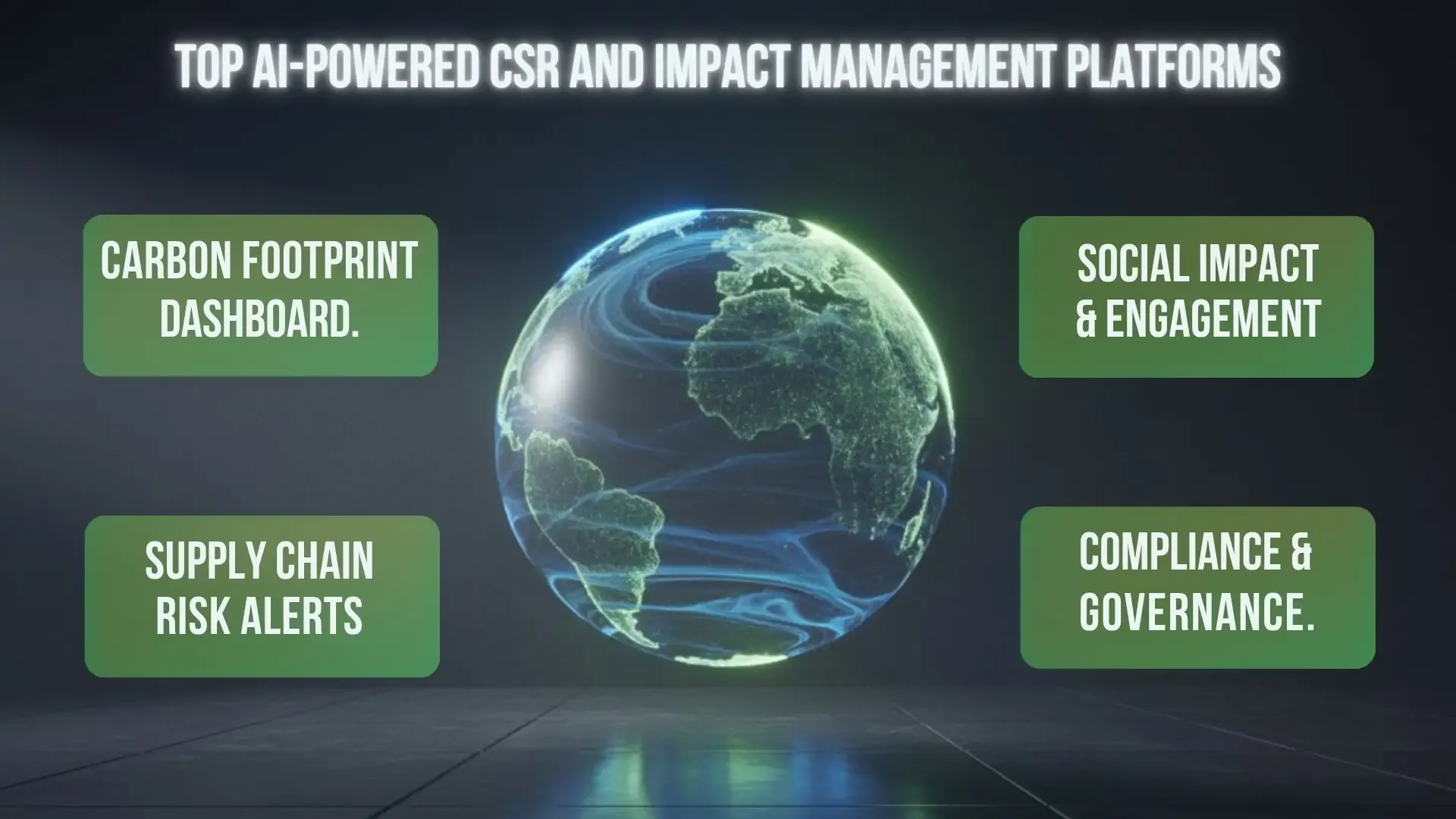
Artificial Intelligence is quickly evolving from a tool for simple data capture to an engine for strategic value in corporate responsibility. Today's leading platforms offer more than just CSR Reporting; they provide Impact Intelligence, predictive analytics, and automated compliance across the entire ESG (Environmental, Social, and Governance) spectrum.
This new wave of ESG Technology allows companies to shift from simply tracking dollars spent to measuring verifiable, real-world social and environmental outcomes. Here are the platforms setting the new standard for AI in CSR:
| Rank | Platform | Core AI Focus & CSR Function | Key Capabilities |
|---|---|---|---|
| 1. | Relific | Impact Intelligence & Grant Management (Focus on Social Impact) | Uses AI-powered analytics to measure and visualise real-world social outcomes (moving beyond just dollars spent). Specialises in complex social projects (Technology, healthcare, livelihoods) to provide data-driven funding optimisation. |
| 2. | Persefoni | Climate Management & Carbon Accounting (Focus on E in ESG) | Utilises AI to automate the collection and calculation of Scope 1, 2, and 3 Greenhouse Gas (GHG) emissions. Provides predictive scenario modelling to inform decarbonization strategies and ensure audit-ready climate disclosures. |
| 3. | Benevity | Workplace Giving & Employee Engagement (Focus on S in ESG) | Integrates AI to personalise the employee giving and volunteering experience, suggesting relevant causes and simplifying the donation matching process. Automates the tracking and reporting of employee impact data. |
| 4. | Workiva | Connected Reporting & Data Assurance (Focus on G in ESG/Compliance) | AI assists in streamlining the collection of data for major regulatory frameworks (like CSRD and SEC rules). Connects financial and non-financial data, using AI to check for consistency and ensure audit-readiness across all public reports. |
| 5. | Submittable | Grant & Social Program Management | Uses AI/ML for application review and scoring, helping foundations and corporations efficiently identify and manage the most impactful grant and social program submissions. Automates compliance tracking and post-award reporting. |
| 6. | Salesforce Net Zero Cloud | ESG & Sustainability Reporting (Enterprise-Grade) | Leverages the power of the Salesforce AI CRM platform to ingest large volumes of ESG data. Features AI-driven analytics for carbon footprint analysis and compliance gap assessment against global standards. |
How AI Integrates into Modern CSR Strategies
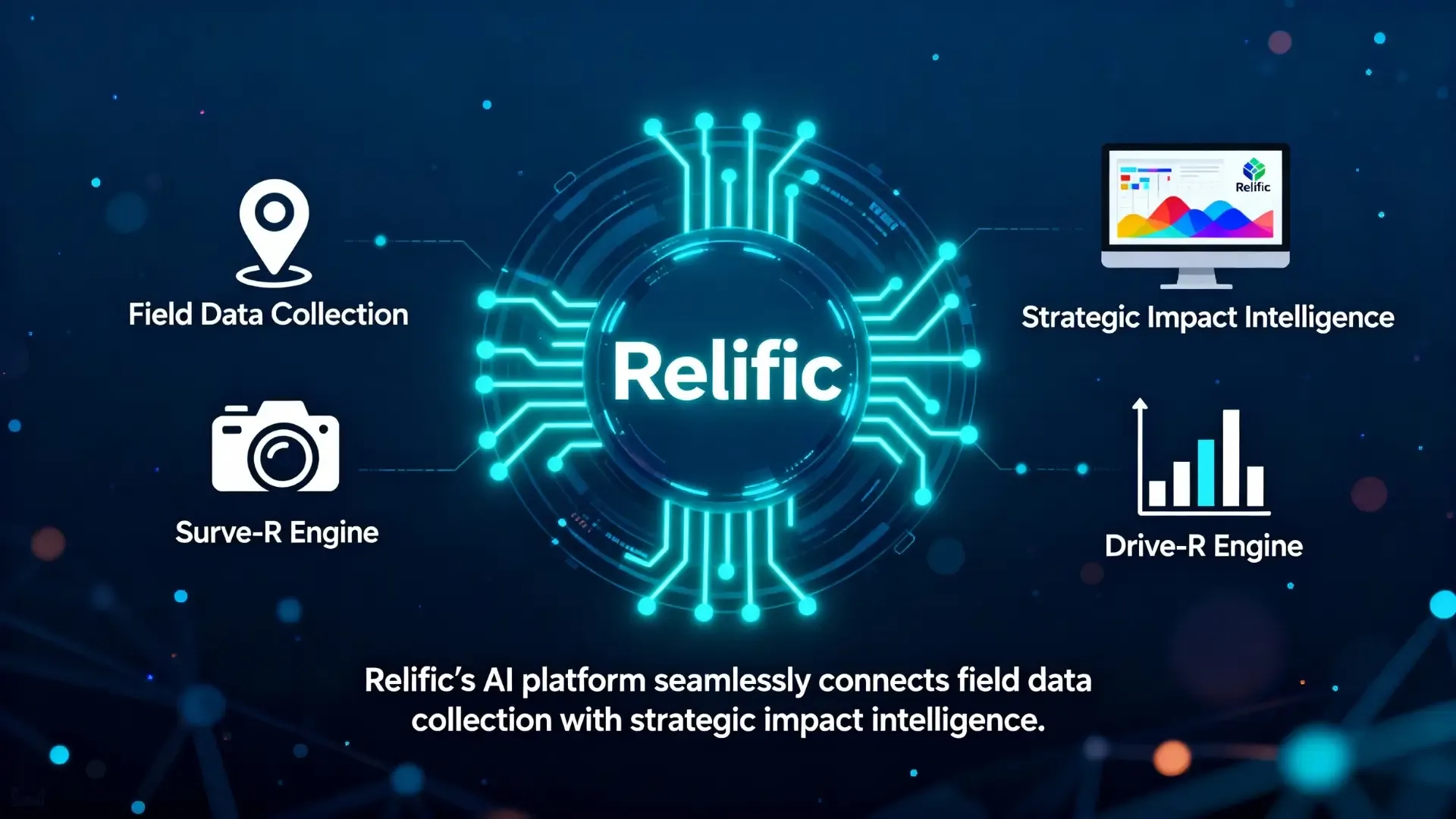
CSR's main mission is to create measurable, positive social and environmental impact. Historically, pinning down this impact was tough it relied on slow, manual, and often spotty data collection. Artificial Intelligence (AI) is now fundamentally changing this, shifting CSR from a simple reporting function into a strategic, data-driven engine. AI improves CSR by tackling the two biggest obstacles: getting reliable data and using that data for intelligent action.
Enhancing Field Data Collection with Automation
The first crucial step in any CSR initiative is gathering accurate data from the field, whether it's tracking educational outcomes, health metrics, or supply chain compliance. AI and related technologies make this process smoother, helping ensure the data collected is both timely and trustworthy.
Reliability and Speed: AI-powered tools, like Relific's Surve-R engine, help field staff quickly gather structured data, even when they're offline. Features like GPS stamping and photo evidence keep the data authentic and tied to the right location.
Automation of Workflows: AI helps cut down on human error by handling approval and verification steps automatically. When certain data is flagged as critical or potentially biased, it immediately sets off role-based workflows so the right people can review it right away. This leads to quicker, more dependable information from the field which becomes the backbone of trustworthy CSR reports.
Transforming Raw Data into Strategic Impact Intelligence
Once data is collected, AI's analytical power comes into play. It transforms vast amounts of raw field data into clear, actionable intelligence, making CSR truly strategic.
Intelligent Management: Relific's platform, featuring the Drive-R engine, is a prime example of a full-stack solution that uses AI and analytics to manage, transform, and map complex data sets. This means you can quickly aggregate results across dozens of projects and locations.
Actionable Insights: AI helps uncover patterns and connections that might otherwise go unnoticed, making it easier for organisations to figure out which programs are really making a difference and where they should focus their resources for the biggest impact.
Streamlined Reporting: Most importantly, AI handles the heavy lifting of creating reports and live dashboards that match global standards like the Sustainable Development Goals (SDGs). This saves teams considerable time while keeping stakeholders and investors informed with clear, trustworthy data.
By bringing AI into every stage of the data process from gathering information to putting it into action companies using platforms like Relific can move beyond just documenting their CSR work. Instead, they can build a smart, responsive strategy that creates real, lasting change you can actually measure and verify.

The Essential Safeguards: Implementing AI Responsibly
In the rush to bring Artificial Intelligence on board, the biggest risk isn't that the technology won't work it's that we might use it in ways that aren't right. To truly benefit from AI over the long term and earn genuine public trust, organisations need to weave strong ethical and practical safeguards into every step of the process.
Here is your expert guidance on implementing AI responsibly:
Mitigate Algorithmic Bias: Vet Your Training Data
The Problem: AI models mirror the data they learn from. When that data carries historical biases, say, from past hiring practices, loan decisions, or how resources were distributed, the AI doesn't just pick up on these patterns; it can actually make them worse. The result is outcomes that are unfair, discriminatory, and could land your organisation in serious legal trouble.
Expert Advice:
Audit Inputs, Not Just Outputs: Focus your initial efforts on thoroughly vetting the training data for imbalances across demographic and protected classes.
Use Counter-Examples: Actively include and weight counter-examples in your training sets to force the model to learn a more equitable distribution of outcomes.
Establish Fairness Metrics: Define and enforce quantitative fairness metrics before deployment, such as Disparate Impact (checking for disproportionate harm to certain groups).
Demand Transparency: Insist on Explainable AI (XAI)
The Problem: Complex AI models often work like "black boxes"; stakeholders can't see why a particular decision was made. This lack of clarity erodes accountability and makes it nearly impossible to meet regulatory requirements. Put simply, if you can't explain how a decision was reached, you won't be able to defend it when questioned.
Expert Advice:
Make XAI a Vendor Requirement: When you're buying AI tools, make Explainable AI (XAI) a non-negotiable vendor requirement. You should demand solutions that can clearly show a human exactly why a model made a specific prediction.
Focus on Feature Importance: For high-stakes, critical decisions (like assessing credit risk or making a medical diagnosis), you need your vendors to detail Feature Importance. This means they have to show you precisely which input variables had the strongest influence on the final decision.
Enable Human Override: Design your entire AI workflow to include a check-and-balance: ensure a qualified human can always review and override any decision that looks biased, wrong, or simply lacks a good explanation.
Prevent "Digital Washing": Tie AI to Substantive Improvement
The Problem: It's tempting to use AI just to create fancy reports or superficially "optimise" things for good PR that's called Digital Washing. If your AI doesn't genuinely make things better, whether it's service, safety, fairness, or efficiency, you've wasted your money and, worse, you'll break trust.
Expert Advice:
Focus on the Net Gain: Every AI project must be linked to a measurable, real improvement in business value or social impact. Don't chase better reports or nicer charts; chase actual change.
Challenge the Metrics: Don't let new, flashy AI reports distract you from old issues. You must demand proof that the AI is actually solving the underlying problem (like systemic bias or inefficiency), not just describing it better.
Ensure Data Privacy and Security by Design
The Problem: AI systems consume huge amounts of sensitive, proprietary data (like supplier costs, employee opinions, or secret operational numbers). A data breach doesn't just mean fines; it destroys stakeholder trust.
Expert Advice:
Demand Zero-Trust Architecture: Insist that your AI vendor's platform uses a "zero-trust" security model. This means nothing; no user, app, or device is automatically trusted. Everything must be continuously verified.
Localise/Anonymise Sensitive Data: Use techniques like federated learning or advanced anonymisation. This ensures that sensitive field data or PII (Personally Identifiable Information) is never unnecessarily exposed during the AI's training or analysis phases.
Bonus: Account for AI's Footprint: Ensure Net Positive Impact
Scaling AI demands substantial computing power, which in turn consumes a lot of energy. For responsible implementation, we have to face this environmental cost. By deliberately selecting low-carbon computing and sustainable data centres, we make sure the efficiency or societal benefits of our AI truly create a net positive environmental impact. This isn't just a tick-box exercise; it shows a profound commitment to corporate responsibility, which is the bedrock for building long-term trust.
Conclusion: Strategic Recommendations for Leadership and the Future of CSR
Let's cut straight to the core truth: Credible CSR isn't about how hard you work; it's about the evidence you show. The arrival of AI isn't just an upgrade; it's the definitive end of manual, reactive reporting, forcing a shift to strategic, data-driven leadership. Platforms like Relific.io solve the old trust problem by automating messy data collection and delivering intelligent activation, transforming scattered field inputs into clean, auditable, and SDG-aligned insights. To win in this new era, your team needs to evolve from data collectors to Impact Architects, interpreting these powerful insights to design programs that actually scale. The leaders of tomorrow won't just report on yesterday; they'll use intelligent automation to establish ethical, transparent frameworks and lead with quantifiable, real-time action. That highway to immediate trust and maximum efficiency is open now. The era of reactive compliance is over. Relific is the engine for the future of CSR. Don't let your data be a risk center; contact us today to turn it into your most valuable strategic asset."
Faqs
Q What is the primary function of AI in CSR? AI's primary function is to transform CSR from a reactive, manual reporting chore into a proactive, strategic, data-driven engine. It shifts the focus from merely documenting past efforts to generating real-time Impact Intelligence to drive future change.
What is the biggest challenge AI solves in traditional CSR? The biggest challenge AI solves is the "Trust Gap" created by fragmented, inconsistent, and slow manual data collection (often stuck in spreadsheets). AI establishes a single, verifiable source of truth for sustainability data, making reports auditable and credible.
Q How does AI create strategic value for the business? AI creates strategic value by:
- Risk Mitigation: Detecting compliance gaps and risks (like supply chain issues) in real-time.
- Efficiency: Freeing up CSR teams from up to 90% of data entry to focus on strategic thinking and innovation.
- C-Suite Confidence: Providing the audit-ready, quantifiable data needed to meet strict regulatory demands (like CSRD) and build investor trust.
Q What are the two core ways AI enhances CSR data? AI enhances CSR data by addressing the two biggest obstacles:
- Reliable Data Acquisition: Automating field data collection with features like GPS stamping and photo evidence to ensure authenticity and speed.
- Intelligent Data Activation: Transforming raw data into actionable insights (Impact Intelligence), allowing leaders to measure actual outcomes and optimise program effectiveness.
Q What is the crucial requirement for responsible AI implementation?
The crucial requirement is Explainable AI (XAI). This mandates that AI tools provide human-interpretable explanations for their decisions, allowing for transparency, preventing algorithmic bias, and ensuring a human can always override a faulty or biased result.
Q Why must leaders account for AI's environmental footprint?
Leaders must account for AI's footprint because scaling AI demands significant energy. Responsible implementation requires actively choosing low-carbon computing and sustainable data centres to ensure that the efficiency gains provided by the AI genuinely result in a net positive environmental impact, a cornerstone of long-term corporate responsibility.


Comments
Post a Comment